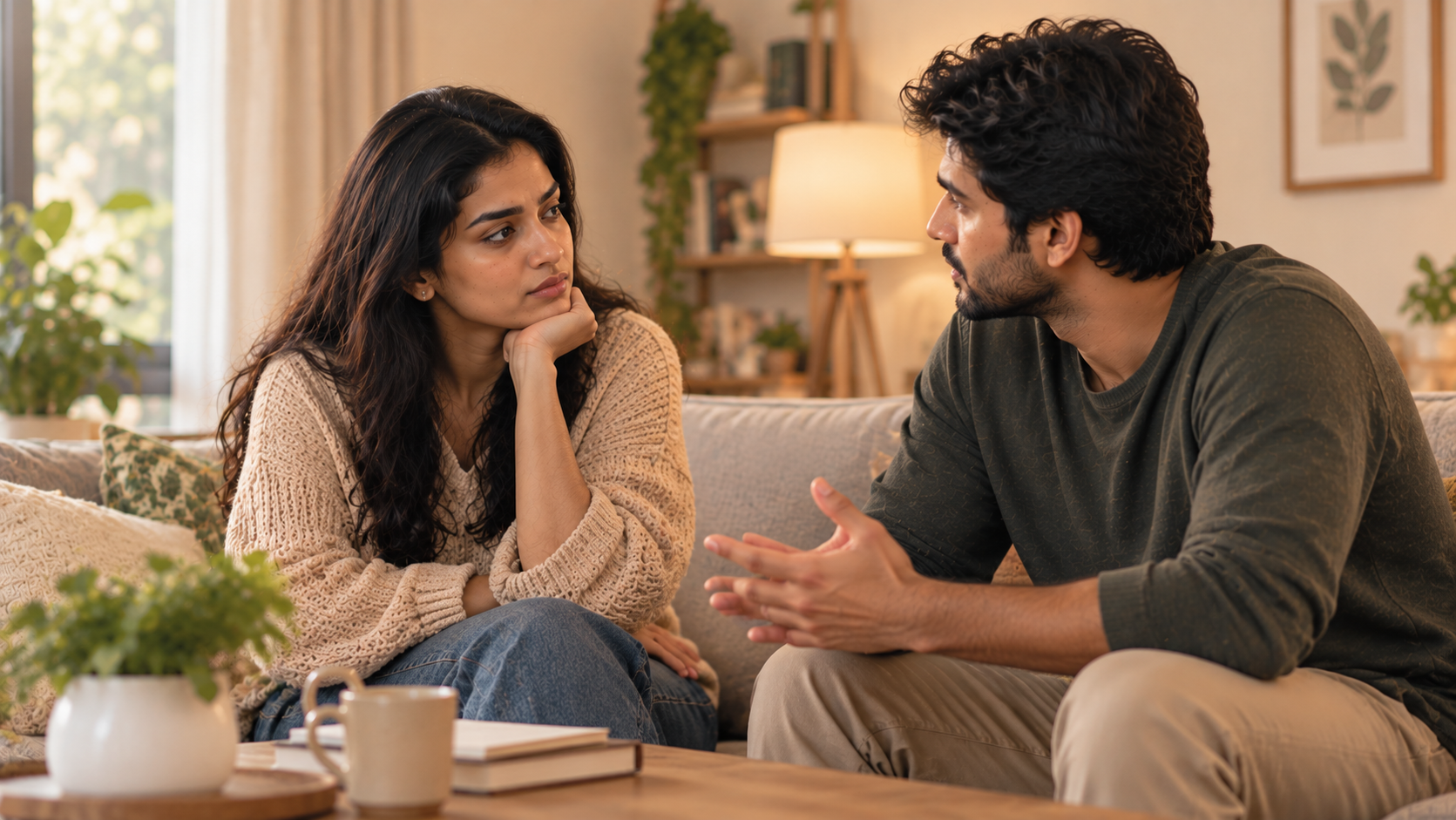
7 Ways Childhood Wounds Quietly Show Up in Your Marriage
Have you ever wondered why a small disagreement with your partner feels much bigger than it should?
Why does a delayed reply make you feel unwanted? Why does your partner's silence make you anxious? Why do you become defensive when someone offers feedback, even when they are trying to help?
Sometimes, the emotions we experience in marriage are not only about what is happening in the present. They may also be connected to what we experienced growing up.
Perhaps you grew up in a home where affection was conditional. Maybe your parents argued frequently, emotions were dismissed, or you learned that being good meant never disappointing anyone.
You may have adapted to those experiences in ways that helped you cope as a child. But as an adult, some of those same patterns can quietly influence how you give love, receive affection, handle conflict, and respond to your spouse.
This is one way childhood wounds can show up in marriage.
The good news is that these patterns are not permanent. Understanding them can help you respond more consciously, communicate more openly, and build a healthier relationship.
Let's explore seven ways childhood experiences may affect your marriage—and what you can do about them.
What Are Childhood Wounds?
Childhood wounds are emotional hurts or unmet needs that develop through difficult, repeated, or significant experiences during childhood.
They can be associated with experiences such as:
- Growing up with frequent criticism or unrealistic expectations.
- Feeling emotionally neglected or misunderstood.
- Witnessing repeated conflict between parents.
- Experiencing unpredictable affection or inconsistent caregiving.
- Being expected to act like an adult before you were ready.
- Feeling responsible for keeping everyone happy.
- Having your feelings dismissed, mocked, or punished.
Not every difficult childhood experience creates lasting emotional wounds. And not every adult relationship struggle comes from childhood.
However, early experiences can influence what we learn about trust, love, conflict, emotional expression, and self-worth.
These lessons may become automatic patterns that we carry into adult relationships without even realising it.
1. You Constantly Need Reassurance That Your Partner Loves You
Do you sometimes worry that your partner is losing interest, even when there is no clear reason to believe it?
Perhaps you frequently ask, "Are we okay?" or feel unsettled when your partner is busy, quiet, or less affectionate than usual.
You may find yourself interpreting small changes in behaviour as signs that something is wrong.
For some people, this pattern is connected to early experiences of inconsistent affection, emotional neglect, or fear of abandonment.
If love felt unpredictable during childhood, you may have learned to stay alert for signs that it could disappear.
As an adult, you might find yourself thinking:
- "What if they stop loving me?"
- "Maybe they're upset with me."
- "If they really loved me, they would know I need reassurance."
- "I need to fix this before they pull away."
Your need for reassurance is not something to be ashamed of. Wanting closeness and security is human.
The difficulty arises when reassurance provides only temporary relief and the anxiety quickly returns.
What can help?
Start by identifying what triggers the fear.
When your partner seems distant, pause and ask yourself:
"Has something actually happened between us, or am I afraid of what might happen?"
Then communicate your need without blaming your partner.
Instead of saying, "You never make me feel loved," try:
"I've been feeling a little disconnected lately. Could we spend some time together tonight?"
This helps your partner understand what you need without making them responsible for guessing your emotions.
Over time, consistent communication, self-awareness, and appropriate support can help you develop a stronger sense of security.
2. You Find It Difficult to Trust Your Partner
Trust is essential to marriage, but it does not always come easily to everyone.
If you grew up around broken promises, secrecy, betrayal, or unpredictable behaviour, you may have learned that trusting someone can be risky.
Even when your spouse is behaving consistently, you might find yourself looking for hidden meanings.
You may check their tone, question their intentions, or assume that something bad is happening when they do not immediately explain themselves.
For example, your partner comes home later than expected. Instead of simply asking what happened, your mind begins creating several possible explanations.
The fear can feel real even when the evidence is unclear.
However, it is important to distinguish between fear rooted in past experiences and concerns based on your partner's actual behaviour. Repeated dishonesty or broken agreements should not be dismissed as merely a childhood wound.
What can help?
Try separating facts from assumptions.
Ask yourself:
- What do I know for certain?
- What am I assuming?
- Has my partner given me a genuine reason to be concerned?
- What would help us rebuild or maintain trust?
If there is a real breach of trust, both partners may need to work towards accountability and repair.
If the fear persists despite consistent, trustworthy behaviour, exploring your past experiences with a qualified therapist may help.
Trust grows through honest behaviour, consistency, and communication—not through forcing yourself to ignore your concerns.
3. You Avoid Conflict Because Disagreement Feels Unsafe
Not everyone who avoids conflict dislikes confrontation. Sometimes, disagreement feels emotionally threatening because of what it represented during childhood.
Perhaps your parents shouted at each other regularly.
Maybe disagreements led to days of silence, emotional withdrawal, or threats of separation.
Or perhaps expressing a different opinion meant being criticised, punished, or made to feel guilty.
You may have learned that keeping the peace was the safest option.
As an adult, you might:
- Agree with your spouse even when you disagree.
- Hide your frustration until it becomes overwhelming.
- Avoid bringing up important needs.
- Apologise simply to end an argument.
- Feel physically anxious when your partner raises their voice.
The challenge is that avoiding conflict does not necessarily create peace. It can lead to resentment, emotional distance, and unresolved problems.
What can help?
Learn to recognise that a disagreement does not automatically mean a relationship is in danger.
Healthy couples can disagree and still care deeply about each other.
Start with smaller conversations rather than waiting until frustration becomes unbearable.
You might say:
"I want to talk about something that's been bothering me. I'm not trying to start a fight. I want us to understand each other better."
Agree on basic rules for difficult conversations: no insults, no threats, no intimidation, and the option to take a break when emotions become overwhelming.
If conflict involves fear, coercion, or abuse, prioritise safety and seek appropriate individual support rather than assuming better communication alone will solve the problem.
4. You Become Defensive When Your Partner Gives Feedback
Does even gentle feedback sometimes feel like a personal attack?
Your spouse might say, "Could we plan our expenses together?" and you hear, "You're irresponsible."
They might ask you to spend more time together, and you hear, "You're a bad partner."
You may respond by explaining yourself immediately, pointing out your spouse's mistakes, shutting down, or turning the conversation into an argument.
For some people, this sensitivity is connected to growing up with frequent criticism, comparison, or conditional approval.
If mistakes were met with shame rather than guidance, you may have learned to associate being wrong with being unworthy.
As a result, feedback in adulthood can activate an old fear: "If I make a mistake, I will not be loved."
What can help?
Practise separating your behaviour from your identity.
Making a mistake does not mean you are a failure. Having something to improve does not make you a bad spouse.
When you feel defensive, pause before responding.
Try asking:
"Can you explain what bothered you? I want to understand what you're saying."
You can also tell your partner:
"Sometimes I take feedback personally. I'm working on listening before I defend myself."
Your partner can help by raising concerns respectfully, but you are also responsible for learning how to receive feedback without automatically treating it as rejection.
Share your details and our team will get in touch with you shortly to assist you.Interested in Learning More?
5. You Become a People-Pleaser in Your Marriage
Perhaps you are always the one adjusting.
You agree to plans you do not want. You avoid saying no. You take responsibility for your spouse's moods. You put your own needs aside because you do not want to disappoint anyone.
From the outside, you may look like a very accommodating partner.
Inside, however, you might feel exhausted, overlooked, or quietly resentful.
People-pleasing can sometimes develop when children learn that approval, affection, or emotional stability depends on being helpful, obedient, or undemanding.
Perhaps you received praise for being the "good child" who never caused trouble.
Maybe you felt responsible for keeping a parent happy.
You may have learned that your needs were less important than everyone else's.
In marriage, this can make it difficult to establish boundaries or express what you genuinely want.
What can help?
Start recognising that having needs does not make you selfish.
A healthy marriage should have room for both partners' preferences, boundaries, and ambitions.
Practise small, honest statements:
- "I'd prefer to stay home tonight."
- "I need some time to myself."
- "I can help with that tomorrow, but I can't do it today."
- "I understand your point, but I see it differently."
You do not need to become less caring. You need to learn that caring for someone does not require abandoning yourself.
Healthy love makes space for two people, not just one person's needs.
6. You Shut Down Emotionally When Things Get Difficult
When your partner wants to discuss a problem, do you go quiet?
Do you struggle to explain what you feel?
Do you say "I'm fine" even when you are hurt, overwhelmed, or angry?
Emotional withdrawal can sometimes be linked to childhood environments where emotions were ignored, discouraged, or treated as a weakness.
If no one helped you understand or regulate difficult feelings, you may have learned to handle them alone.
Silence may have become a way to protect yourself.
You might tell yourself:
"It's better not to say anything."
"Talking about feelings will only make things worse."
"I should be able to handle this myself."
In marriage, this can create a painful cycle. One partner seeks conversation and reassurance, while the other withdraws. The more one pursues, the more the other may retreat.
Both can end up feeling misunderstood.
Share your details and our team will get in touch with you shortly to assist you.Interested in Learning More?
What can help?
You do not need to explain every emotion perfectly to communicate honestly.
Start by naming what is happening internally.
For example:
"I'm feeling overwhelmed, and I need a little time to organise my thoughts. I do want to come back to this conversation."
If you need a break during conflict, agree on a time to reconnect rather than leaving the discussion indefinitely unresolved.
You can also practise identifying emotions outside arguments by asking yourself:
- Am I hurt, angry, embarrassed, frightened, or exhausted?
- What happened just before I felt this way?
- What do I need right now?
- What would help me communicate that need?
Learning to express emotions is a skill. It can develop gradually with practice and support.
7. You Expect Your Partner to Heal Every Hurt From Your Past
This is one of the most subtle ways childhood wounds can affect marriage.
You may hope that your spouse will finally give you the love, attention, validation, or security you missed while growing up.
You might expect them to understand your feelings without explanation, always know when you need comfort, or prove repeatedly that they will never leave.
Perhaps you feel deeply disappointed when they cannot meet an emotional need, even if they are trying their best.
For example, if you grew up feeling overlooked, your partner's busy work schedule may feel like evidence that you are unimportant.
If you grew up feeling criticised, a minor disagreement may feel like rejection.
Your feelings are real, but your partner may not always understand the deeper meaning an event holds for you.
A spouse can offer love, patience, and support. But they cannot single-handedly undo every painful experience from your childhood.
What can help?
Begin by recognising the difference between a present need and an old wound that may be getting activated.
Ask yourself:
"Am I upset only about what happened today, or does this remind me of something I have felt before?"
Then share the connection with your partner without making them responsible for your entire healing process.
For example:
"When plans change unexpectedly, I sometimes feel unimportant. I think that feeling is connected to some experiences from my past. It would help me if we could let each other know when plans change."
You can ask for reasonable support while also working on your own emotional wellbeing.
Healing is not about becoming completely independent of your partner. It is about building a relationship where you can receive love without expecting the other person to repair every part of your past.
Share your details and our team will get in touch with you shortly to assist you.Interested in Learning More?
How to Know Whether a Childhood Wound Is Affecting Your Marriage
A difficult emotion does not automatically mean you have an unresolved childhood wound.
Sometimes your spouse's behaviour genuinely hurts you. Sometimes a disagreement is simply a disagreement. And sometimes your response is influenced by a combination of past experiences and present circumstances.
However, you may benefit from looking more closely at your patterns if you notice that:
- The same kinds of arguments keep happening.
- Your reactions feel much stronger than the immediate situation seems to warrant.
- You repeatedly expect rejection, criticism, or abandonment.
- You struggle to communicate needs or maintain boundaries.
- You find yourself responding to your spouse as though they are someone from your past.
- You understand your reactions logically but struggle to change them.
Rather than asking, "What's wrong with me?", try asking:
"What might this reaction be trying to protect me from?"
That question creates space for curiosity instead of shame.
Can Childhood Wounds Affect Both Partners?
Yes. Both partners may bring their own experiences, expectations, and coping patterns into a marriage.
Consider a couple where one person becomes anxious when their partner withdraws, while the other withdraws when they feel criticised.
When a disagreement happens, one partner pushes for reassurance. The other feels overwhelmed and becomes quieter. The first partner interprets the silence as rejection and pushes harder. The second withdraws further.
Neither person may intend to hurt the other, yet their reactions reinforce each other's fears.
The solution is not to decide which partner is the problem.
It is to recognise the pattern and understand how both people contribute to it.
They might agree that the partner who needs space will communicate when they plan to return to the conversation, while the partner who needs reassurance will try to allow that pause without escalating the disagreement.
Small, consistent changes can gradually create a different experience of conflict.
How to Stop Childhood Patterns From Damaging Your Marriage
You cannot change what happened in your childhood, but you can learn to respond differently in the present.
Here are five practical starting points.
1. Notice Your Triggers
Pay attention to moments when you become unusually anxious, defensive, withdrawn, or angry.
Instead of reacting immediately, identify what happened and what you felt.
Over time, you may begin to notice recurring themes.
2. Separate the Past From the Present
Ask yourself whether your current reaction is based on what your partner has done, what you fear they might do, or what a situation reminds you of.
This is not about dismissing your feelings. It is about understanding them more accurately.
3. Communicate Your Needs Clearly
Your partner cannot always know what is happening internally.
Instead of expecting them to guess, explain what you feel and what would help.
"I feel disconnected when we go several days without meaningful time together. Could we set aside an evening for us?"
Clear requests are more useful than blame or unspoken expectations.
4. Practise New Responses
If you usually withdraw, try expressing one feeling before taking a break.
If you tend to become defensive, listen to your partner's concern before explaining your perspective.
If you people-please, practise stating a preference honestly.
Progress does not require perfect reactions. It requires repeated opportunities to respond differently.
5. Consider Professional Support
A qualified mental health professional can help you explore difficult childhood experiences, understand relationship patterns, and develop healthier ways of responding.
Individual therapy may be helpful when you want to work on personal experiences or emotional triggers. Relationship counselling may help when both partners want to understand recurring patterns and improve communication.
If your relationship involves abuse, intimidation, or coercive control, seek confidential individual support and prioritise safety.
Can a Marriage Become Healthier Even If Childhood Was Difficult?
Absolutely.
A difficult childhood does not determine the kind of spouse you will become.
You can learn to trust more thoughtfully, communicate more openly, set boundaries, and respond to conflict with greater awareness.
Your partner can also learn to understand your experiences without treating you as broken or reducing every disagreement to your past.
The goal is not to blame your parents, blame yourself, or analyse every emotion.
It is to recognise the patterns that no longer serve you and begin building healthier ones.
Sometimes progress looks like having a difficult conversation without shutting down. Sometimes it means asking for reassurance without accusing your partner. Sometimes it means setting a boundary you would once have been afraid to express.
These changes may seem small, but they can influence the emotional atmosphere of a marriage over time.
How HappyBeing Can Support Your Relationship
Sometimes, understanding a pattern on your own is difficult—especially when it keeps repeating despite your best intentions.
Relationship counselling can provide a space for both partners to explore recurring disagreements, understand emotional needs, and practise healthier communication.
If childhood experiences are affecting your sense of trust, emotional security, or self-worth, individual support may also help you work through those experiences at your own pace.
The aim is not to decide who is at fault.
It is to help you understand what is happening, take responsibility for your part, and build a relationship where both people feel respected and heard.
You can explore HappyBeing's relationship counselling resources to learn more about support for relationship challenges and personal growth.
Frequently Asked Questions
1. Can childhood trauma affect marriage?
Yes. Difficult childhood experiences can influence how adults respond to trust, conflict, affection, emotional closeness, and boundaries. However, experiences affect people differently, and not every relationship difficulty is caused by childhood trauma.
2. What are signs of childhood wounds in a relationship?
Possible signs include persistent fear of abandonment, difficulty trusting, people-pleasing, emotional withdrawal, heightened sensitivity to criticism, and recurring conflict patterns. These behaviours can have many causes and do not, by themselves, establish that someone has experienced trauma.
3. Why do I overreact to small things in my marriage?
Strong reactions may arise when a present situation reminds you of an earlier painful experience. Stress, exhaustion, unmet needs, and current relationship problems can also contribute. Identifying the trigger can help you understand what is happening before responding.
4. Can childhood emotional neglect affect adult relationships?
It can. Some people who experienced emotional neglect find it difficult to identify their feelings, ask for support, trust affection, or feel comfortable with emotional closeness. These patterns can change with awareness, practice, and appropriate support.
5. How do I stop projecting childhood experiences onto my spouse?
Start by noticing your triggers and separating what you know about the current situation from what you fear based on past experiences. Communicate your needs clearly, take responsibility for your reactions, and consider professional support if the pattern continues.
6. Should I tell my spouse about my childhood wounds?
If you feel safe doing so, sharing relevant experiences can help your spouse understand your emotional responses and needs. You do not have to share everything at once. Choose a calm moment and focus on what helps you understand each other better.
7. Can relationship counselling help with childhood wounds?
Relationship counselling can help couples understand how their individual experiences influence their interactions. Individual therapy may be more appropriate for exploring personal trauma in depth, although the right approach depends on each person's circumstances and goals.
Final Thoughts
Sometimes, the argument you are having with your spouse is only partly about the issue in front of you.
Beneath it may be a fear of rejection, a need to feel important, a difficulty trusting, or an old habit of staying silent to keep the peace.
Recognising these patterns does not mean your feelings are wrong or that your childhood defines you.
It means you have an opportunity to understand yourself more deeply.
You do not have to repeat every pattern you learned growing up. And your marriage does not have to become a place where old hurts are continually reopened.
With awareness, honest communication, boundaries, and the right support, you can begin creating a different experience of love—one built not only on what you learned in the past, but also on the choices you make today.
Your childhood may have shaped some of your relationship patterns. It does not have to write the rest of your marriage.